






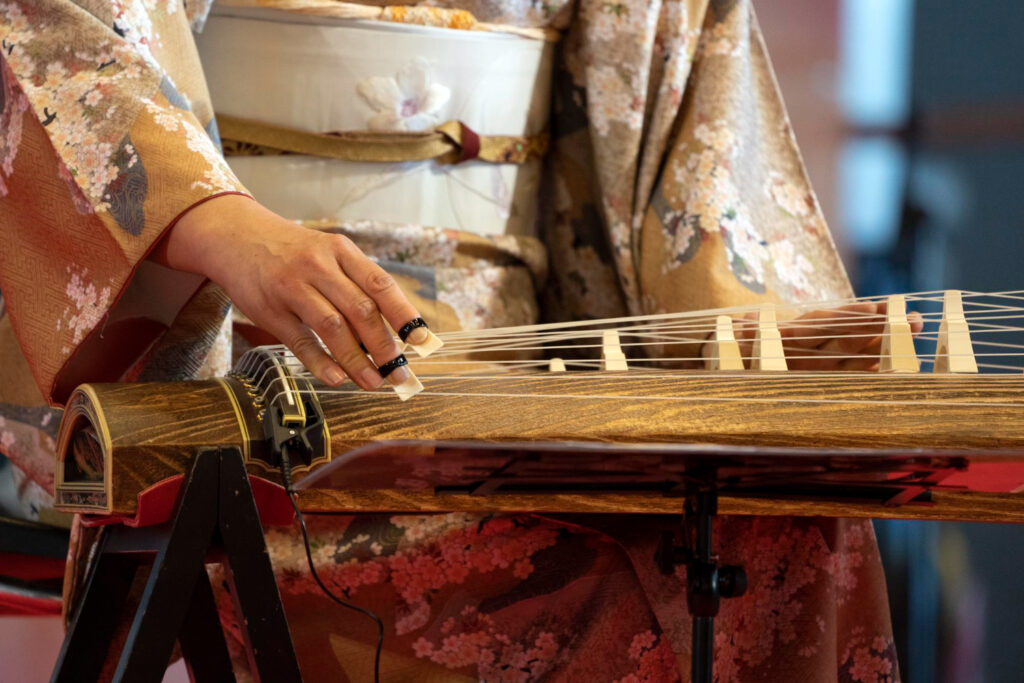
Japanese traditional music, part one
There are three types of traditional music in Japan:
- theatrical
- court music (gagaku)
- and instrumental
Noh (nogaku) music is the type of theatrical music.
It is performed by “hayashi-kata” – the instrumental ensemble, and usually accompanies yokyoku – the vocal music, in noh theater. The instruments used for performing Noh are the taiko, stick drum, a big hourglass shaped drum (otsuzumi), a smaller hourglass shaped drum (kotsuzumi), and a bamboo flute (nohkan).
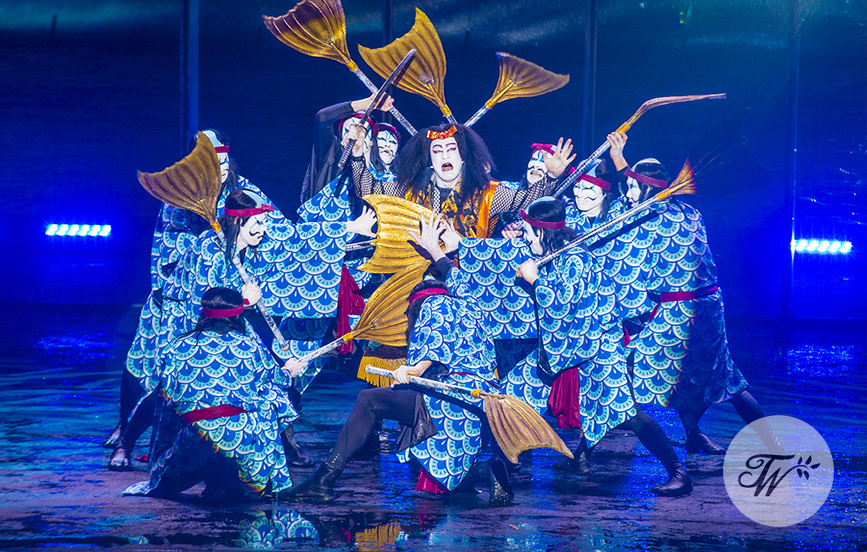
Kabuki is a type of Japanese theater. It is well known for its stylized dancing and singing, as well as the elaborate make-up. At first, Kabuki used Hayashi, but later on, it incorporated its own instruments (such as shamisen).
The music of kabuki can be divided into three categories:
Geza – performed by playing music and sound effects on stage behind a black bamboo curtain (kuromisu); can be further divided into uta (song) – sung (usually by multiple singers at once) in accompaniment to shamisen, aikata – represents the shamisen music without any singing, and narimono – played by musical instruments besides the shamisen.
Shosa-ongaku – encompasses music played on the stage and accompanies acting and dancing.
- Takemoto – recites the parts of the play concerning scenery. Actors synchronize their lines with the rhythm (an effect known as “get onto strings”).
- Nagauta – the most commonly used form of geza; it consists of singers (utakata) and shamisen players (shamisenkata). Shamisenkata use hosozao (the thin-neck shamisen) which produces high tones and can produce delicate melodies.
- Tokiwazu – consists of reciters (tayu) and shamisenkata that use chuzao (the medium-neck shamisen)
- Kiyomoto – consists of tayu and shamisenkata (using chuzao); words and sentences are full of emotion, and are recited in very high tones. music styles).
Ki and tsuke – covers the sounds made by striking two square oak boards. When the boards strike each other, the “ki” sound is produced. Likewise, When the are struck against a hardwood board, the “tsuke” sound is produced.
You can see how the Kabuki theater looks in this You tube video:
https://www.youtube.com/watch?v=4JjLuh4Ns7s


IPL 2016
23/02/2016Hello colleagues, nice piece of writing and fastidious arguments commented at this
place, I am really enjoying by these.
walmart credit cards login
23/02/2016Excellent pieces. Keep writing such kind of info on your site.
Im really impressed by your blog.
Hello there, You’ve done an incredible job. I will definitely digg it and
in my view recommend to my friends. I am sure they will
be benefited from this website.
EmileLHamiel
23/02/2016My partner and that i stumbled over here from your different website
address and thought I might check things out. I love things i see so i am just following
you. Look ahead to looking over your internet page repeatedly.